
A Holdings Penetration Analysis of AI Compute ETFs – How Much is Memory Exposure Underestimated?
Most AI investors can recite the usual suspects in their sleep: Nvidia, AMD, Microsoft, Alphabet, maybe a sprinkling of cloud platforms and chip designers. Ask the same investors how much memory exposure—DRAM, HBM, NAND, and storage infrastructure—they actually hold through their AI compute ETFs, and the answers get fuzzier. Yet in 2026, memory has increasingly been labeled the “biggest bottleneck” in AI, and dedicated memory ETFs have quietly exploded in assets and performance.
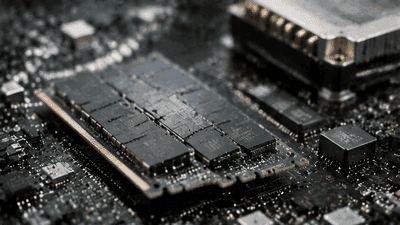
This post takes a holdings penetration view: looking through AI compute ETFs to see how much memory exposure they contain, directly and indirectly, and why that exposure is often underestimated. The aim is not to produce a rigid checklist, but to offer a flexible, polished framework for thinking about how memory hides in plain sight inside AI portfolios—and what that means for ETF and index derivative strategies focused on AI storage and computing power.
The Contrast: AI Compute ETFs vs Memory-Thematic ETFs
Before analyzing penetration, it helps to contrast two types of products that coexist in the current market:
- Broad AI compute & tech ETFs: These funds hold a mix of AI software, hyperscalers, semiconductor designers, and platforms. Their top holdings often include Nvidia, AMD, TSMC, Alphabet, Apple, Meta, Tencent, and other tech giants.
- Memory-focused thematic ETFs: Newer products concentrate on DRAM, HBM, and NAND manufacturers—names like Micron, Samsung Electronics, SK hynix, Kioxia, Western Digital and Seagate—often in highly concentrated portfolios.
From a marketing perspective, AI compute ETFs present themselves as “AI in one trade,” while memory ETFs sell a sharper narrative: “AI’s hidden bottleneck.” The interesting part is how much of that bottleneck already lives inside the broader AI ETFs, without being explicitly recognized or sized.
Direct Memory Exposure: The Obvious But Underweighted Names

Direct memory exposure in AI compute ETFs comes from holdings in companies whose primary business is memory manufacturing or storage. These are the headline names in memory-focused funds, but they often appear only modestly in broader AI products.
For example, a typical AI technology ETF may have:
- Samsung Electronics in the top ten holdings, with a weight of around 3–4%, primarily classified as “technology hardware” or “semiconductors.”
- Broadcom and other diversified chip firms that have meaningful exposure to networking and storage components alongside compute.
- Occasional positions in memory-adjacent names such as Intel or Western Digital, though often outside the top tier in many AI funds.
These allocations matter, but they are dwarfed by large weights in compute-centric stocks and platforms. In contrast, memory ETFs can devote 70–90% of their weight to a handful of memory suppliers alone, with three companies representing roughly three quarters of a portfolio. Seen through this lens, most AI compute ETFs have direct memory exposure—but at levels that underrepresent the role memory actually plays in AI economics.
Indirect Memory Exposure: Compute-Centric Names With Hidden Memory Leverage
Where penetration analysis gets more interesting is in indirect exposure: companies that are classified and perceived as “compute” or “platform” names, but whose earnings and capex are increasingly shaped by memory dynamics.
Several categories stand out:
- GPU and accelerator vendors: Companies like Nvidia and AMD sell compute chips, but those chips are paired tightly with high-bandwidth memory and server-grade DRAM. Their product value and margins depend on memory capacity, bandwidth, and cost.
- Foundries and packaging specialists: TSMC and other advanced foundries are central to producing HBM and stacked memory alongside compute dies. Their revenue mix indirectly reflects memory-intensive AI designs.
- Cloud and hyperscaler platforms: Alphabet, Amazon, Microsoft and other platforms invest heavily in AI data centers where memory and storage density per node is rising. Earnings sensitivity to memory pricing and availability may not be obvious in holdings lists, but it is real in infrastructure decisions.
AI compute ETFs often overweight these names, meaning they carry embedded memory leverage even when they show zero direct allocation to pure-play memory manufacturers. Penetration analysis should therefore ask not only “how many memory producers do we hold?” but also “how much of our top-10 exposure depends operationally on memory constraints?”
Why Memory Exposure Gets Underestimated

Several structural reasons explain why memory exposure is underestimated in AI compute ETFs:
- Labeling bias: Holdings are categorized by sector labels such as “Semiconductors,” “Technology,” or “Communication Services,” which obscure distinctions between compute-heavy and memory-heavy businesses.
- Narrative focus: AI stories tend to emphasize model innovation, GPUs and software platforms. Memory is described as a bottleneck but rarely marketed as the hero, leading investors to assume it is a secondary component.
- Portfolio construction: Many AI ETFs are built around broad AI-related benchmarks that weight by market cap, naturally favoring mega-cap platforms and chip designers over specialized memory producers.
The result is that investors in AI compute ETFs often think of themselves as “long AI” but may not realize how much of their risk and opportunity resides in the memory stack—both through modest direct holdings and through indirect operational leverage in their top positions.
A Simple Holdings Penetration Framework
To make the idea practical, imagine a simple holdings penetration framework that analysts or investors can apply to any AI compute ETF:
- Step 1: Tag direct memory names. Identify holdings whose primary business is DRAM, HBM, NAND, SSDs, controllers or storage infrastructure. Sum their weights to get direct memory exposure.
- Step 2: Tag memory-levered names. Among top holdings, highlight compute vendors, foundries and cloud platforms whose AI offerings are heavily memory-dependent. Assign a qualitative or quantitative score to their memory leverage (for example, low, medium, high).
- Step 3: Build a memory sensitivity profile. Combine direct exposure and leverage scores to create a picture of how tied the ETF is to memory cycles.
This framework does not need to be line-by-line perfect. Even rough tagging can reveal whether an AI compute ETF is functionally carrying 5%, 15% or 30%+ memory sensitivity, once direct and indirect exposure are considered.
Comparing Memory Penetration Across AI ETFs
When this kind of analysis is applied across AI-focused ETFs, certain patterns emerge:
- Tech-heavy AI ETFs: Products that lean heavily into U.S. mega-cap tech and software platforms tend to have low direct memory exposure but moderate indirect leverage through data center capex and AI infrastructure.
- Semiconductor-centric AI ETFs: Funds concentrated in chip designers, foundries and hardware names, including Samsung or SK hynix, show higher memory penetration both directly and indirectly.
- Dedicated memory ETFs: Thematic funds like DRAM, DISK or KMEM have extremely high direct memory exposure, with portfolios dominated by a handful of pure-play memory companies.
Broad AI compute ETFs often sit in the first two categories. Their prospectuses and marketing materials emphasize AI algorithms and compute engines, but the underlying holdings list tells a more mixed story, especially as memory shortages reshape AI deployment economics.
Underestimation Through Performance Attribution
Another way memory exposure gets underestimated is through performance attribution. When AI compute ETFs outperform during a given period, credit is often given to headline names like Nvidia or Meta. Yet in 2026, some of that outperformance is driven by memory dynamics that lift compute-adjacent names and AI infrastructure broadly:
- Supply-constrained memory pushes up input costs, but also raises the strategic value of platforms that can secure supply, benefiting certain cloud and chip names.
- High bandwidth memory shortages limit GPU deployments, pushing investors to seek exposure in memory suppliers and memory-rich hardware configurations, indirectly supporting holdings in AI compute ETFs.
- Sector rotation from pure GPU plays into memory stocks lifts semiconductors broadly, raising the tide under mixed AI compute ETFs as well as pure memory funds.
If attribution frameworks focus only on ticker-level returns without connecting those returns to memory price cycles and capacity trends, memory’s role in AI ETF performance can be easily misread or sidelined.
Implications For ETF Design: Making Memory Explicit
The underestimation of memory exposure in AI compute ETFs raises a design question: should future AI storage and computing products make memory explicit, rather than leaving it implicit in mixed portfolios?
Several possibilities stand out:
- Dual-layer indices: Construct AI infrastructure indices with separate compute and memory tiers, making it easier to see and manage memory allocations within a single product.
- Memory-tilted AI ETFs: Offer AI compute ETFs with explicit minimum allocation thresholds to memory suppliers, or smart beta tilts that favor companies with higher memory leverage.
- Paired products: Launch or combine pure memory ETFs with general AI ETFs, encouraging investors to hold both as complementary exposures rather than relying on hidden memory penetration in compute-centric funds.
These design choices acknowledge that memory is no longer a background component in AI—it is a central driver of capacity, economics and bottlenecks. Making that role visible can help investors align their portfolios with the realities of 2H 2026 and beyond.
Index Derivatives: Separating Compute and Memory Bets
Index derivatives provide another way to respond to underestimated memory exposure. Instead of accepting a blended AI compute ETF as a single instrument, traders can use futures and options on different indices to separate their memory and compute views.
For example:
- Overlay strategies: Hold a broad AI compute ETF in spot while layering long exposure to a memory index via futures or options, effectively increasing memory penetration to match a desired thesis.
- Spread trades: Trade the spread between a memory index (or memory ETF) and a compute-heavy AI index, expressing views about whether memory or compute will lead the next leg of performance.
- Hedging memory sensitivity: Use derivatives on memory indices to hedge unintended memory exposure in AI compute ETFs, for example during phases when memory valuations seem stretched or policy risks rise.
These derivative strategies rely on understanding holdings penetration first. Without a clear picture of how much memory exposure is already embedded in AI compute products, overlay and spread trades are harder to calibrate.
Investor Communication: Helping Users See Memory
One softer but important implication is communication. Many AI ETF fact sheets and marketing materials still emphasize broad tech themes while relegating memory to footnotes. A holdings penetration analysis suggests that more explicit communication about memory could be valuable:
- Breakdowns by functional role: Instead of just sector labels, show portfolios broken down into compute, memory, storage, networking and platform exposure.
- Highlight memory bottleneck narratives: Explain how memory shortages and price cycles can impact performance, even when the fund’s mandate is “AI compute.”
- Compare to pure memory ETFs: Help investors see how their AI compute ETF’s memory exposure compares with dedicated memory funds, highlighting opportunities or gaps in their allocation.
Better communication does not change the underlying exposures, but it does reduce the risk that investors misunderstand what they are actually holding—and how much memory risk and reward they have implicitly assumed.
Closing Thoughts: Seeing The Hidden Layer
A holdings penetration analysis of AI compute ETFs ultimately reveals a simple but important truth: memory exposure is already there, hiding in ticker lists and earnings sensitivities, but it is often underestimated because the narrative is dominated by compute. In a year when DRAM and HBM shortages have become central to AI capacity planning and memory ETFs have surged to record assets and returns, treating memory as an afterthought no longer fits the facts.
For investors and index designers, the task is twofold. First, look through AI compute products to understand how much memory exposure is present—directly via holdings and indirectly via leverage in platforms and chip vendors. Second, decide whether that exposure matches the role memory now plays in AI, or whether explicit adjustments via thematic memory ETFs and index derivatives are warranted.
AI storage and computing power is not a single-layer story. Compute has the branding; memory increasingly has the bottleneck—and, in 2026, a growing share of the investment opportunity. Seeing and quantifying that hidden layer is the first step toward building AI portfolios that reflect not just how we talk about AI, but how it actually runs.
You May Like

Narrowing Spread Between NAND Spot and Contract Prices in 2026 – A Signal
By 2026, one of the most watched metrics in the NAND flash market has started to shift in a subtle but meaningful way: the spread between spot prices and long‑term contract prices is narrowing. For casual observers, this may look like just another incremental change in a notoriously volatile industry. For memory makers, module houses, device OEMs, and data center buyers, however, a tightening gap between spot and contract prices is a signal—a reflection of evolving supply–demand balance, risk perceptions, and strategic behavior on both sides of the market.

Price Divergence Trading Strategies Between NAND Flash and DRAM ETFs
NAND flash and DRAM sit at the core of AI storage and computing power. Both are memory, but they are not the same business. DRAM is main memory—fast, volatile, and central to high‑bandwidth workloads like AI training and inference. NAND is non‑volatile storage—slower than DRAM, but crucial to persistent data and large‑scale object storage. The cycles that drive their pricing and margins overlap, yet they often diverge. That divergence is where trading strategies between NAND and DRAM ETFs become interesting.

China’s HBM Localization Progress: The Catch-Up Pace of CXMT and XMC
China’s drive to localize advanced memory technologies has accelerated over the past several years. High-Bandwidth Memory (HBM) sits near the center of that strategy because it is integral to AI accelerators, high-performance computing (HPC) and other strategic compute platforms. Two domestic players—ChangXin Memory Technologies (CXMT) and XMC (Xianghui Memory, commonly referred to as XMC)—have become focal points in assessing how quickly China can close the gap with international incumbents on HBM die, stacking, and packaging.
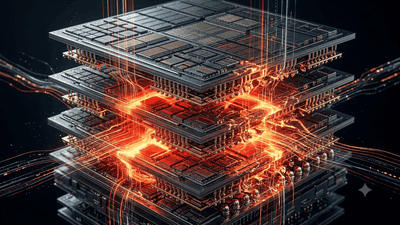
Thermal Simulation Challenges and Solutions in 3DIC AI Chip Design
As AI workloads push chips to deliver ever higher compute density, designers are increasingly turning to three‑dimensional integration (3DIC) to stack dies vertically and pack more functionality into limited footprints. While 3DIC architectures unlock significant performance and bandwidth advantages, they also introduce complex thermal behaviors that are far harder to predict and manage than in traditional 2D layouts.
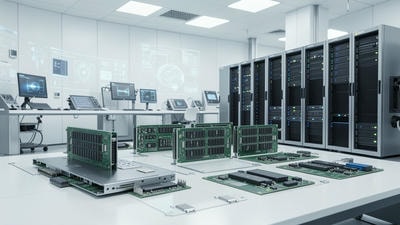
An Attempt at Compiling a Memory+Compute Fusion Thematic Index – A Dual-Track Framework
Most AI investors talk about “compute” as if it were the whole story: GPUs, accelerators, chips, cores. But every one of those cores needs somewhere to read from and write to. Memory and storage define how wide the data highway really is. In practice, AI performance is a fusion of compute and memory, not a solo act. So why do so many indices and ETFs separate them into different silos—one for semiconductors, one for memory, one for data centers—when the actual workloads keep blending them?

Surging Demand for Laser Drilling and Plasma Dicing Equipment in Advanced Packaging
Advanced packaging has become one of the semiconductor industry’s most important growth engines, and it is now pulling a surprising set of process tools into the spotlight. Among the most in-demand are laser drilling and plasma dicing equipment. These machines sit close to the heart of heterogeneous integration, fan-out packaging, wafer thinning, TSV formation, glass substrate processing, and other advanced flows where precision, yield, and throughput matter enormously. As packaging moves from a back-end afterthought to a strategic platform, the equipment used to shape, open, and separate materials has become just as important as the dies themselves.
D2D Interface Bandwidth and Latency Comparison in Chiplet Architectures
Chiplet architecture has turned the package into a real performance battleground. Once multiple dies are placed side by side or stacked within the same advanced package, the quality of the die-to-die, or D2D, interface becomes one of the most important determinants of system behavior. Bandwidth is no longer a nice-to-have metric, and latency is no longer a small implementation detail. Together, they shape whether a chiplet system feels nearly monolithic or frustratingly fragmented.

Stock Selection Logic and Alpha Validation of ESG-Themed Semi ETFs
Semiconductor themed ETFs are no longer just about growth and cycles. A growing subset now layers environmental, social, and governance (ESG) criteria on top of traditional sector exposure. These ESG semi ETFs promise two things at once: access to one of the market’s most powerful secular themes, and alignment with sustainability and governance standards. The pitch is appealing, but it raises two hard questions. First, how exactly are these stocks being selected? Second, does the ESG overlay help, hurt, or leave alpha unchanged?